
Kam Wah Chung Interpretive Center

The KWC Interpretive Center in John Day is fundamentally a landscape-driven act of restoration as much as it is a building project. The site sits within the historic setting of Kam Wah Chung, a National Historic Landmark that preserves the story of one of the most important Chinese communities in Oregon and the American West. Any intervention here must help reestablish the physical and cultural relationship between the museum, the surrounding grounds, and the larger historic Chinatown that once extended beyond the surviving building.
The intent of this project is to transform a previously altered site into a setting that better reflects its original cultural landscape. The City of John Day describes the former Gleason Pool property as land that will be restored to reflect its earlier use as a historic Chinese settlement, and the new interpretive center is envisioned to match the historic Chinatown landscape. That makes the landscape architecture central to the project’s success. The ground plane, circulation, spatial edges, and interpretive outdoor elements can all work together to recover a sense of place that has been obscured over time.
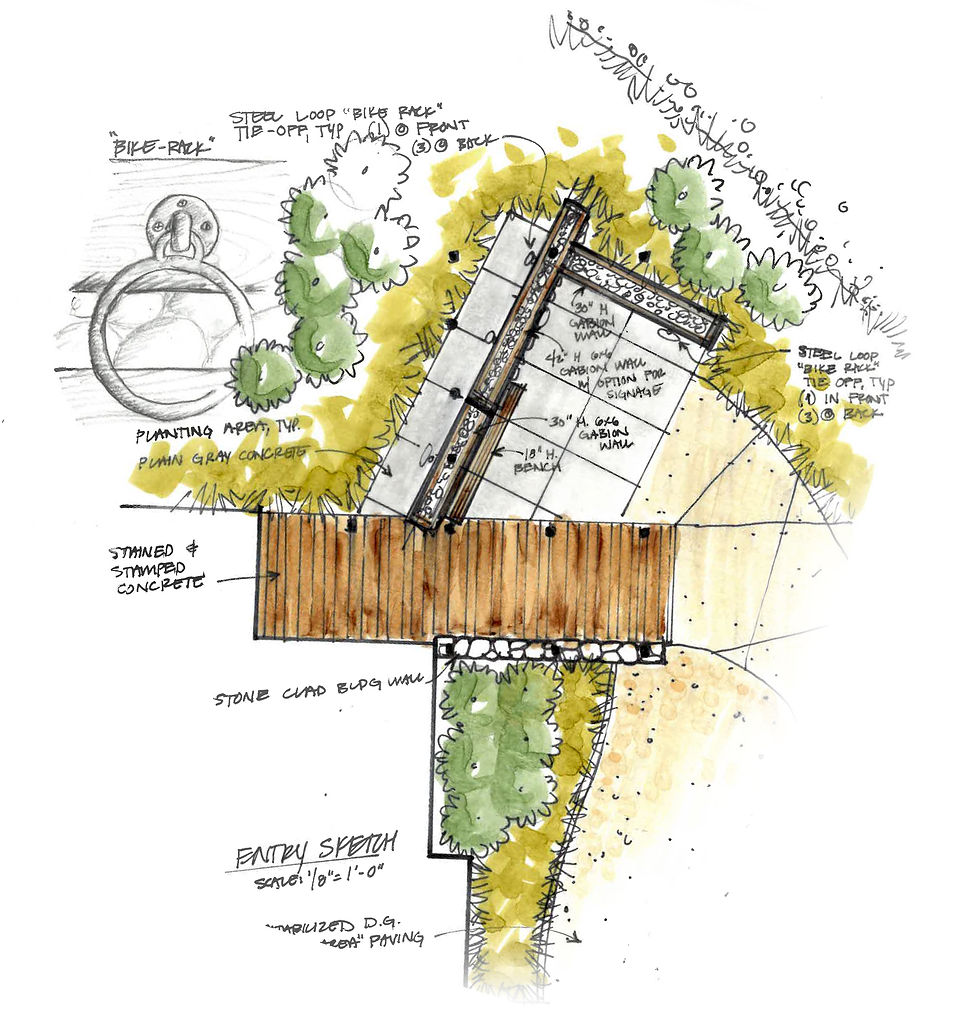
This is especially significant because research has shown that Kam Wah Chung was never an isolated structure, but part of a much larger and more active community. Archaeological and historical investigations note that John Day’s Chinatown once included numerous buildings arranged around the Kam Wah Chung site, with pathways and an unpaved street structure that helped define a broader neighborhood setting. The Oregon Encyclopedia also records that by 1887 the area included stores, a temple, temporary housing, vegetable gardens, and even a fish and duck pond, reinforcing that the historic character of the site was shaped as much by its landscape systems as by its architecture.
For that reason, reconstruction of the site emphasizes memory through landscape form. Thoughtful grading, historically informed planting strategies, walkways, gathering spaces, and interpretive site elements are designed to help visitors understand that this was once a thriving cultural district.

At the same time, the project must support practical needs tied to preservation and public use. The new center is intended to expand exhibit space, improve environmental controls, and provide areas for collections, administration, and secure stewardship of materials that cannot be adequately housed in the historic structure alone. A well-designed landscape can support those operational goals by clearly separating public arrival, staff functions, and service access while creating a dignified frontage that strengthens the museum’s civic presence in downtown John Day.
The KWC Interpretive Center is an opportunity to repair the relationship between history, land, and community. By restoring the site’s cultural landscape and shaping an interpretive experience that begins outdoors, the project can honor the legacy of John Day’s Chinese residents while creating a welcoming and historically grounded environment for future generations.


